There are numerous orthopedic conditions that are noticed in people. Some originate right at the time of birth while some occur at later stages of life. There is no defined age for an orthopedic issue to occur.
One of the most common orthopedic conditions reported around the world is fractures, and they could be seen in all ages. But there are certain orthopedic problems that occur right at the time of birth and are noticed as the child grows. One such condition is limb length discrepancy, and this will be our focus in the post. Let us see what it is.
Limb Length Discrepancy – An Overview
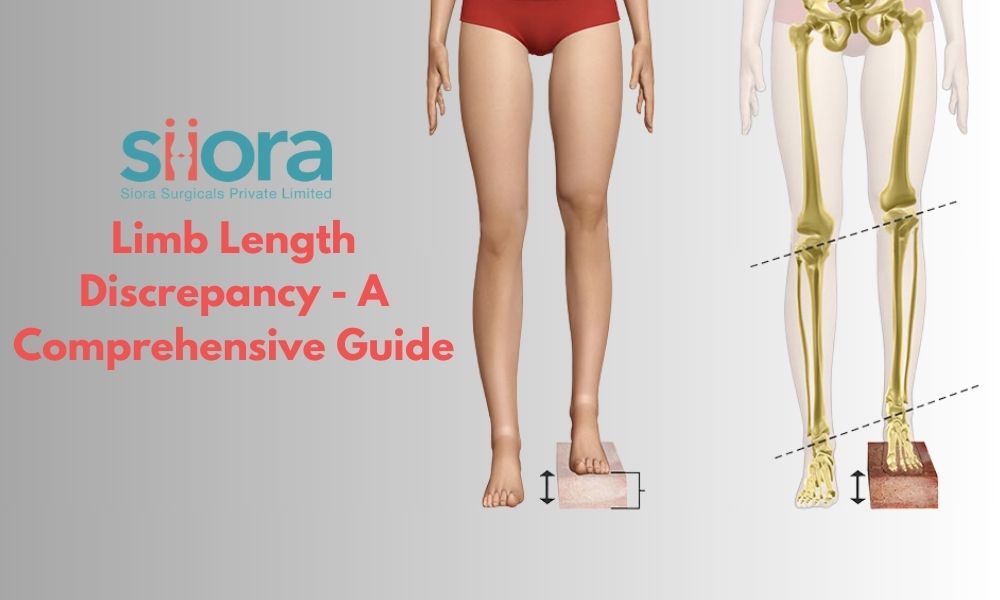
LLD or limb length discrepancy is the condition in which the child has an unequal arm or leg lengths. In some cases, the difference is almost unnoticeable and hence, no treatment is necessary.
It won’t be wrong to say that slight differences in the limb length are common thus, they are often ignored as they do not cause any complications or issues. But the problem arises when the difference is noticeable. In such situations, it is important to consult an orthopedist at the right time to avoid serious complications.
LLD can occur in arms as well as legs, but it is often ignored in arms because it does not hinder their functioning or pose any problems. In legs, LLD could be serious and may result in other orthopedic issues like back pain and hip joint pain if left untreated for long. Small differences of around 1 cm or less than ½ inches are common, and generally do not require any treatment. But bigger differences may require surgery involving orthopedic trauma implants like External Fixator.
How LLD Affects Daily Functioning?
Noticeable differences in the leg lengths often affect the daily activities of the child as he/she grows. The affected child will have trouble walking, running, and playing any sports. Besides this, hip and/or back pain will also be experienced. Significant differences in the lengths can also be easily noticed by the parents.
What Are the Causes of Limb Length Discrepancy?
LLD sometimes could be a mysterious condition with no known cause, while in some cases, the condition is present at birth. But it will be noticed as the child grows. Besides this, LLD could also occur due to some other causes:
- Dysplasias or other bone diseases
- Bone infection
- Joint inflammation like juvenile idiopathic arthritis
- Certain neurological conditions like paralytic disorders or cerebral palsy
- Tumor or surgery done to remove a tumor
What Are the Symptoms Associated with the Condition?
As we’ve discussed above a major issue is not there if the condition is seen in the arms, but the problem is when it occurs in the legs. Some of the symptoms associated with the condition may include:
- Uneven length of the thigh bone and shin bone
- Walking difficulties like limping or walking on the toes of the shorter leg
- Easy fatigability
How LLD is Diagnosed?
Diagnosis of the condition can be made by physical examination and measuring the lengths of the leg, but imaging tests are also performed to check the skeletal maturity of the child. The imaging tests performed may include:
- X-ray
- CT scan
- MRI
- EOS imaging
How LLD is Treated?
There are certain factors on which the treatment of the condition depends:
- The length of the discrepancy
- The age and development of the child
- If the cause is unknown
Based on these factors, the surgeon will decide which type of treatment will be the best. Let us see what options are there to treat the condition:
Non-Surgical Treatment
Non-surgical treatment may include the use of orthotics like shoe lifts. They are known to help relieve back pain. Besides this, in children who have not reached skeletal maturity, the doctor will examine after every six to twelve weeks to determine whether the difference in the leg is the same or increasing.
Surgical Treatment
Surgery is the last and most used method to correct limb length discrepancies. It could be done to achieve one of these:
- Shorten the limb
- Lengthen the limb
- Stopping or slowing down longer limb’s growth
Depending upon the type of surgery performed, different types of orthopedic devices may be used like Orthopedic Implants Plates, External Fixator Device, and others.
To get a CE-certified range of orthopedic devices, contact Siora Surgicals Pvt. Ltd., an experienced manufacturer of an extensive range of orthopedic devices. Based in India, the company also exports its quality products to clients based in different countries across the globe. It is also looking to be counted among one of the Orthopedic Device Manufacturers in USA that supplies excellent quality implants.
 Trauma Implants
Leave a comment